SORA WhitePaper
- SORA Whitepaper
- Chapter 1: Introduction
- Chapter 2: Overview of SORA L1
- Chapter 3: Experimental Architecture of SORA L2
- Chapter 4: Use Case Trials
- 1. Encrypted Memo Pad Functionality
- 2. Drive Diagnostic Data Embedding
- 3. Load Testing Across Key Sizes
- 4. Scalability Observation via Multiple Key Sizes
- 5. Automated Data Recovery (AI + Blockchain)
- 6. Detailed SSD Diagnostics (AI + Blockchain)
- 7. HDD Sector Fault Simulation (AI + Blockchain)
- 8. Automated Maintenance via Blockchain
- 9. Other Use Cases
- Roadmap
- Current Phase (Already Completed)
- Ongoing Key Scalability Monitoring
- External Blockchain Integration (2025–2026)
- AI Diagnostic Function Expansion
- Monetization Model Expansion
- Community and Investor Engagement Phase
- Conclusion
SORA Whitepaper
Chapter 1: Introduction
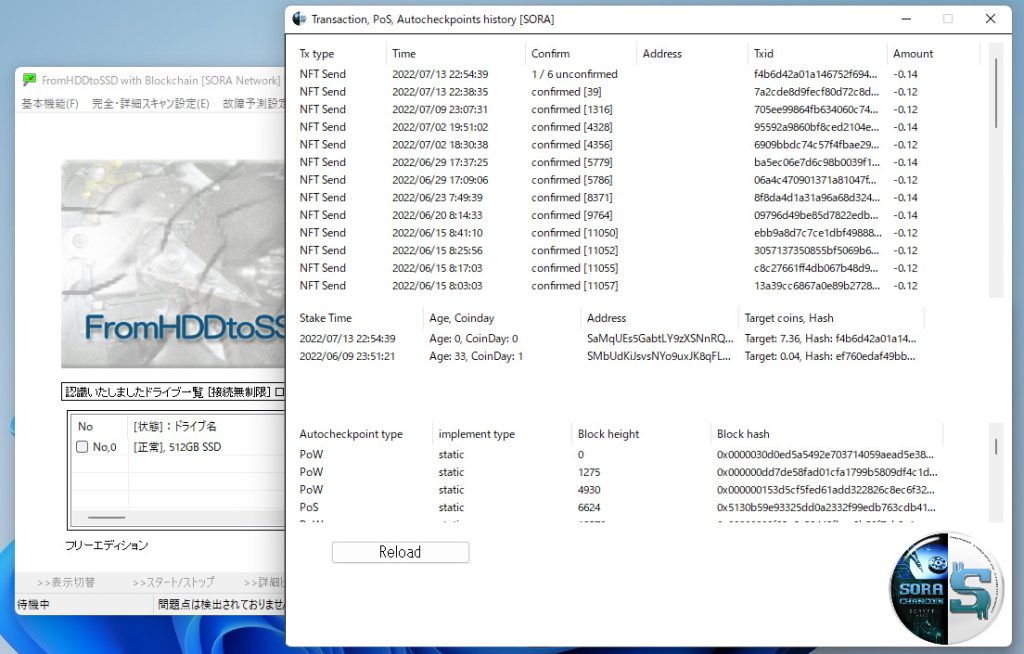
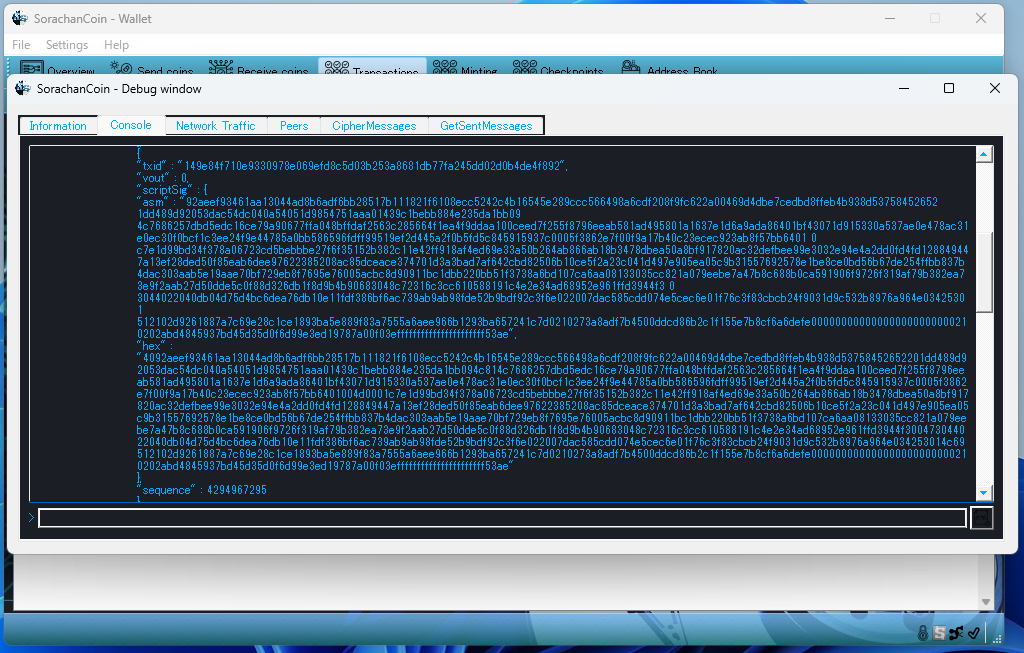
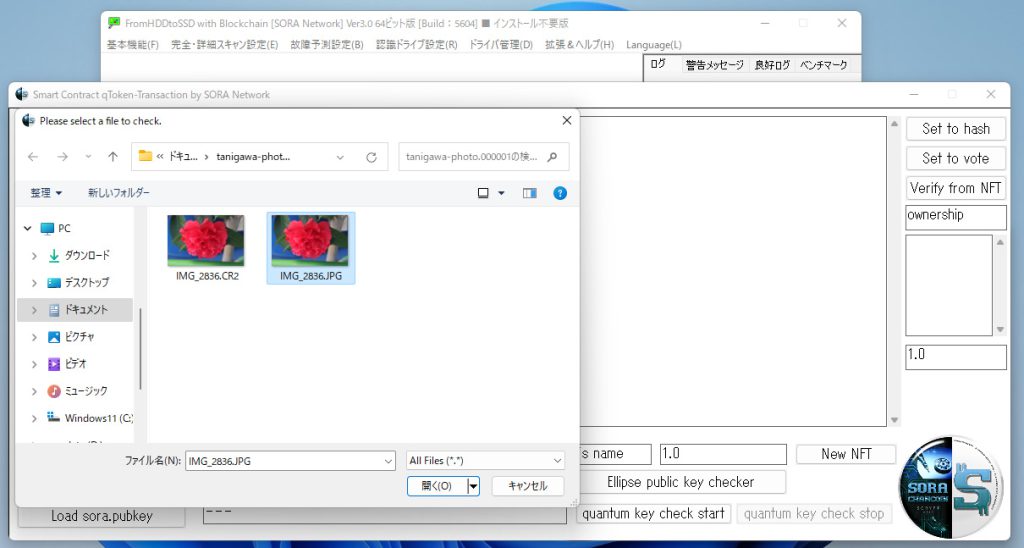
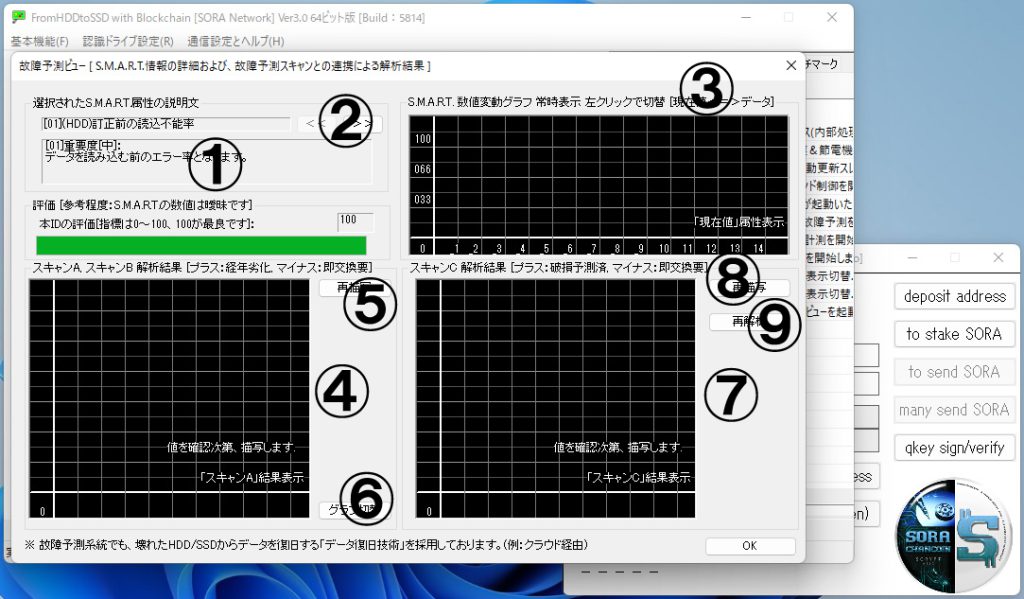
SORA operates with entirely separate programs for L1 (Layer 1) and L2 (Layer 2), employing a structure where the executable files themselves are isolated. Each is built on an independent design philosophy and runs on distinct codebases and binaries, ensuring both stability and extensibility. L1 is focused on stability and basic quantum resistance, while L2 is positioned as an experimental and flexible environment for applied development. As shown in provided screenshots, both layers are maintained independently.
The SORA project is designed as a next-generation decentralized infrastructure, with an eye on the era of quantum computing. Traditional blockchain technologies face future limitations—particularly the vulnerability of public-key cryptography to quantum algorithms. To address this, SORA has integrated quantum-resistant technologies early on to minimize such impact.
This whitepaper provides only a brief overview of L1 and focuses mainly on the experimental developments and functions being tested within L2.
Chapter 2: Overview of SORA L1
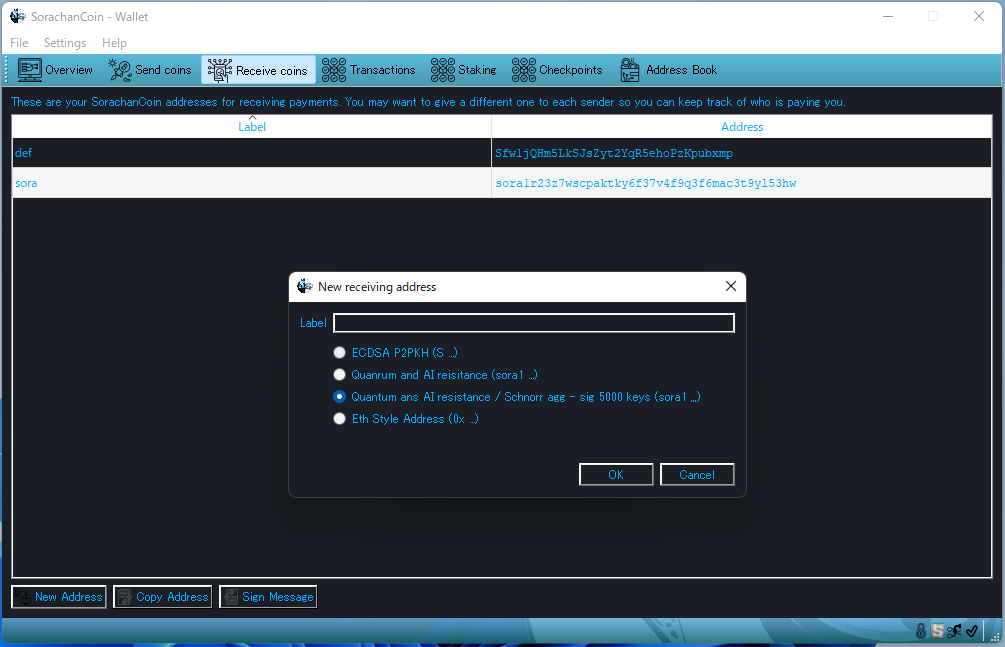
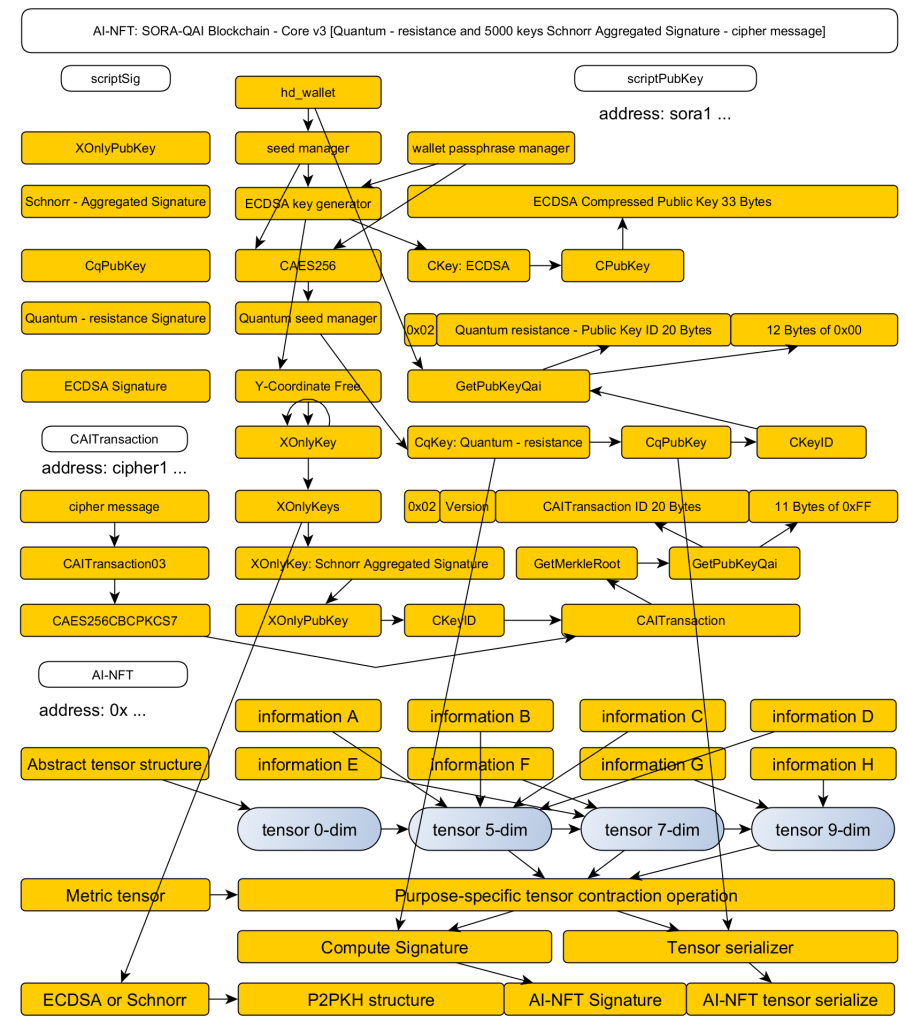
SORA L1 is a blockchain infrastructure with built-in quantum resistance. Through hash-based signatures and elliptic curve key compression techniques, it achieves resistance to quantum computation that surpasses conventional PoW (Proof of Work) blockchains.
Details of L1’s internal structure are omitted here, as it is already operational. Our current focus is on testing various applications in L2, which shapes the future direction of the project. Since L1 is stable and not subject to frequent modification, SORA’s strategic development will primarily revolve around L2.
Chapter 3: Experimental Architecture of SORA L2
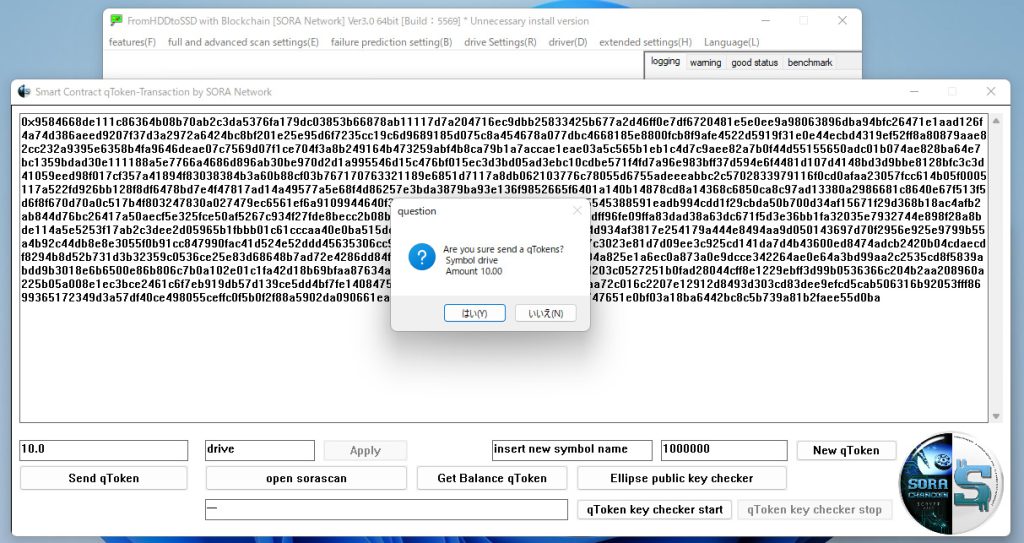
SORA L2 was developed as a high-flexibility experimental environment and uses a relatively large 2048-bit quantum-resistant key.
Although large signature sizes are usually avoided, L2 accommodates them effectively for use cases such as:
- Embedding information in transactions (“encrypted memo pad”)
- Protecting NFT structures with quantum-resistant signatures
- Recording drive diagnostic data securely in coordination with AI testing tools
These uses justify the larger data overhead.
Using the 2048-bit key itself is part of our experimental initiative, driven by:
- Preparation for future expansion of search space
- Recognition that the current 256-bit space is insufficient for future-proofing
- Verification of data-dense signature embedding techniques
In practice, nodes are already processing transactions with 2048-bit signatures, confirming the architecture’s resilience to growing information loads.
Chapter 4: Use Case Trials
Here are real-world test cases implemented on the SORA L2 environment using 2048-bit keys.
1. Encrypted Memo Pad Functionality
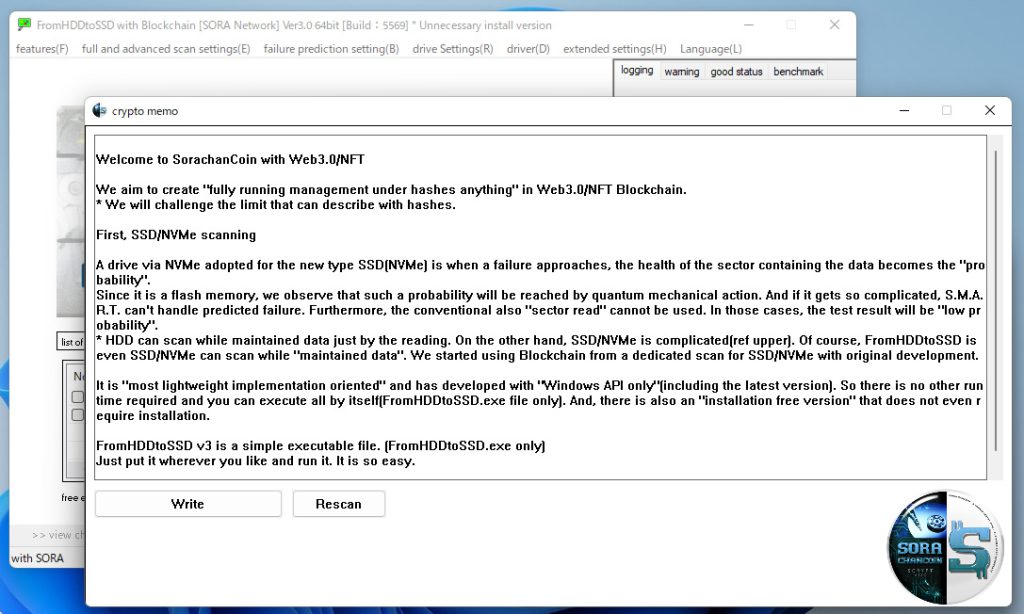
A 2048-bit signature area is used to embed user-defined memos and configuration data. This portable format is useful for NFTs and IoT integration, enabling standalone data transfer without reliance on external systems.
2. Drive Diagnostic Data Embedding
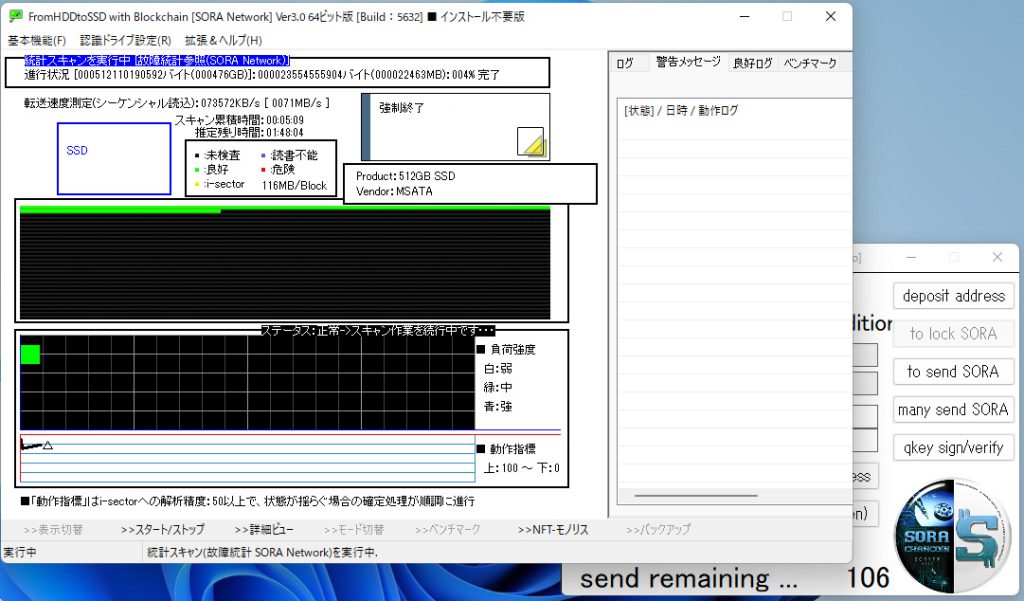
We tested blockchain-based logging of AI-driven drive diagnostics. Compressed output was inserted into the signature field, making post-verification and tamper detection highly reliable.
3. Load Testing Across Key Sizes
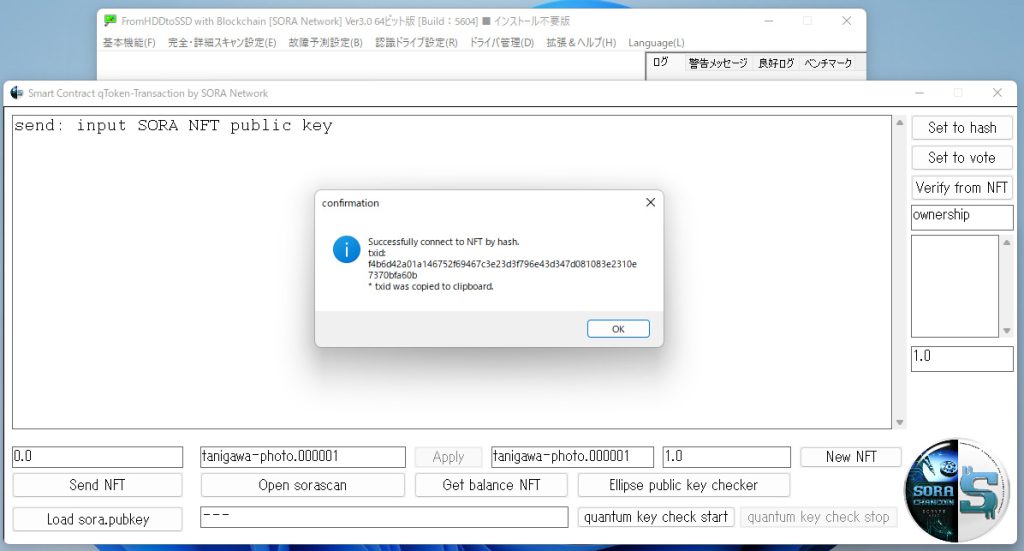
Performance was measured across keys of 256, 1024, and 2048 bits. All sizes were processed within node performance thresholds, and even 2048-bit signatures posed no threat to PoW block production.
4. Scalability Observation via Multiple Key Sizes
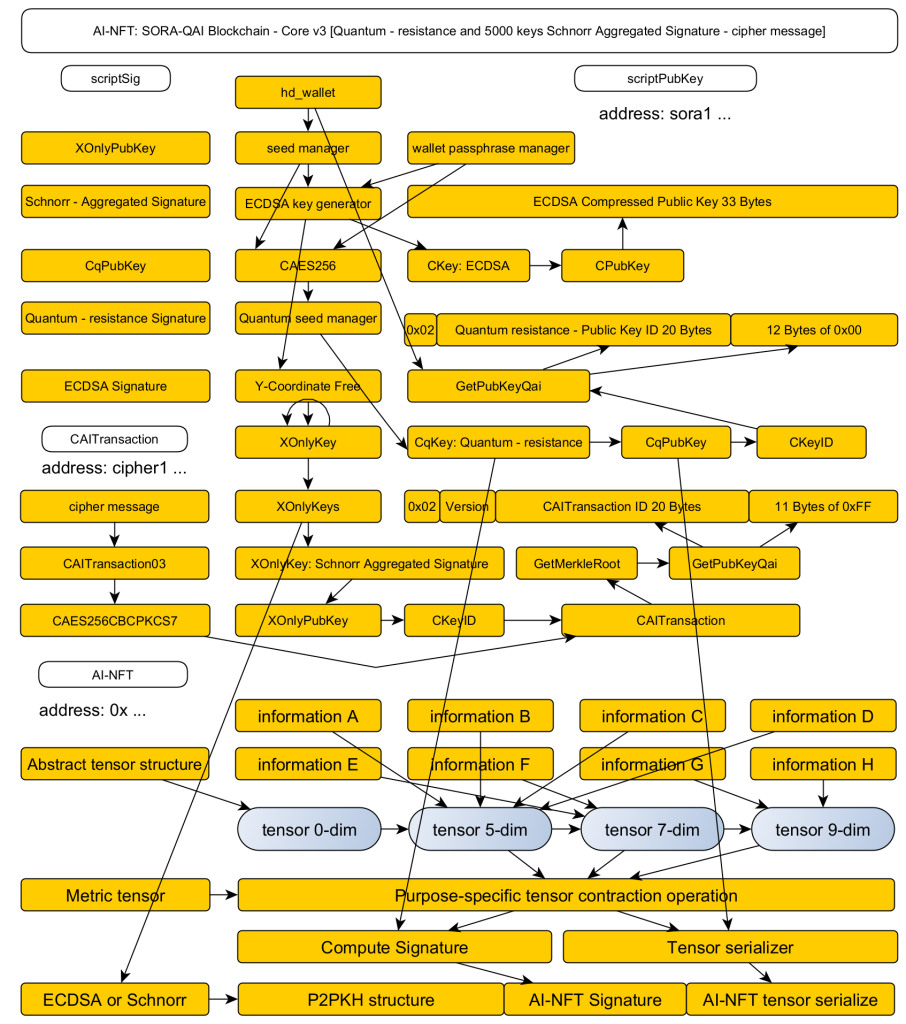
SORA L2 implements a framework for testing multiple key sizes (e.g., 512 / 1024 / 2048-bit) simultaneously, observing their effects on communication, verification, and block generation. Given the evolving nature of quantum and AI computational environments, this approach avoids over-committing to a single key structure.
This flexibility allows future switching to the most suitable cryptographic format, possibly even automated, based on real-time performance analysis. Unlike L1, SORA L2 permits free experimentation, including exporting selected key schemes to external blockchains.
5. Automated Data Recovery (AI + Blockchain)
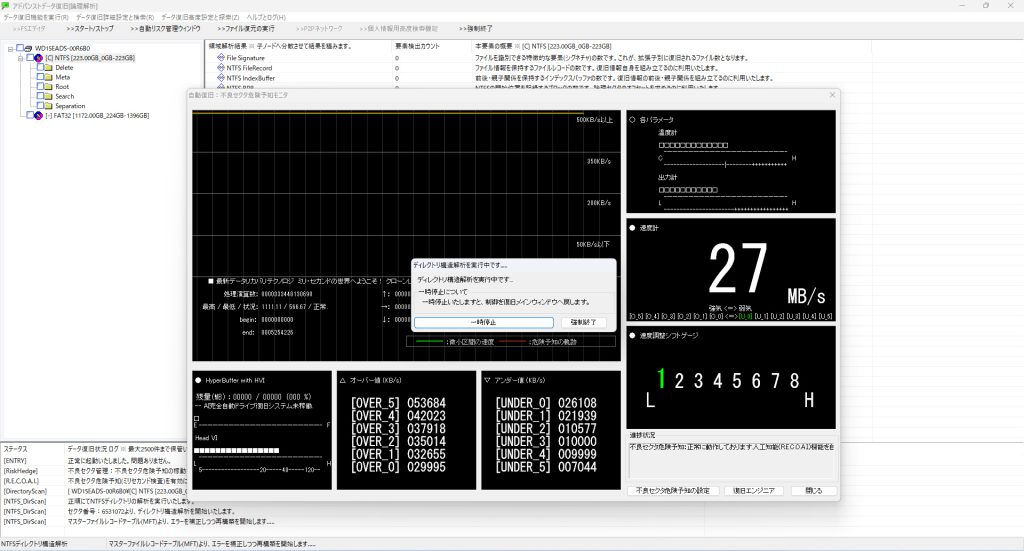
When failures occur, AI automatically identifies and repairs errors, while logging the process onto the blockchain for integrity and auditability.
6. Detailed SSD Diagnostics (AI + Blockchain)
The system diagnoses wear-leveling, voltage fluctuation, and other SSD-specific issues using AI, and records results on the blockchain for traceability and long-term monitoring.
7. HDD Sector Fault Simulation (AI + Blockchain)
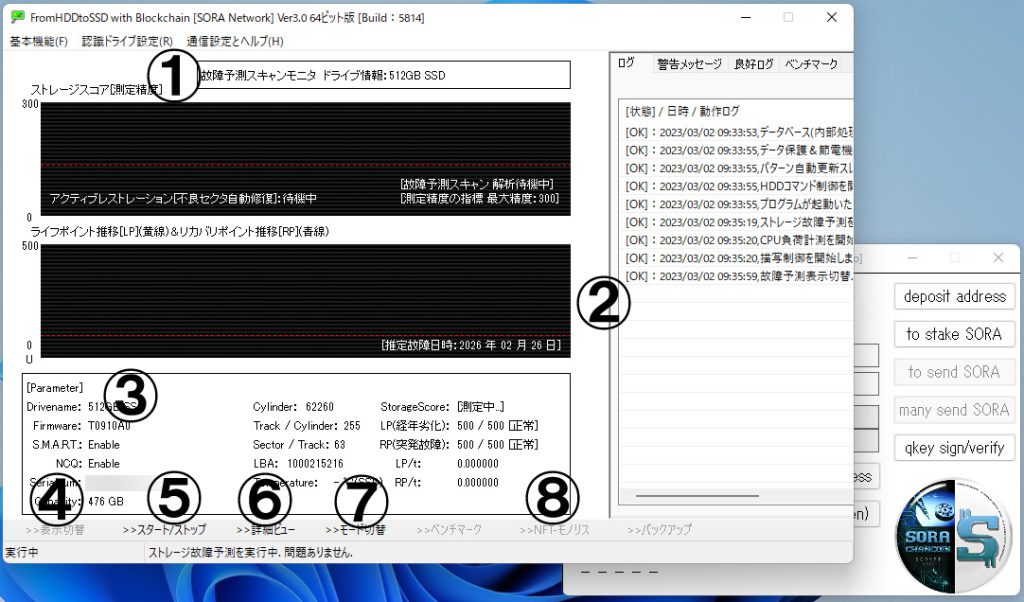
Using simulated sector failure models, AI generates realistic drive fault patterns, which are then stored on the blockchain. This supports risk modeling and failure prediction.
8. Automated Maintenance via Blockchain
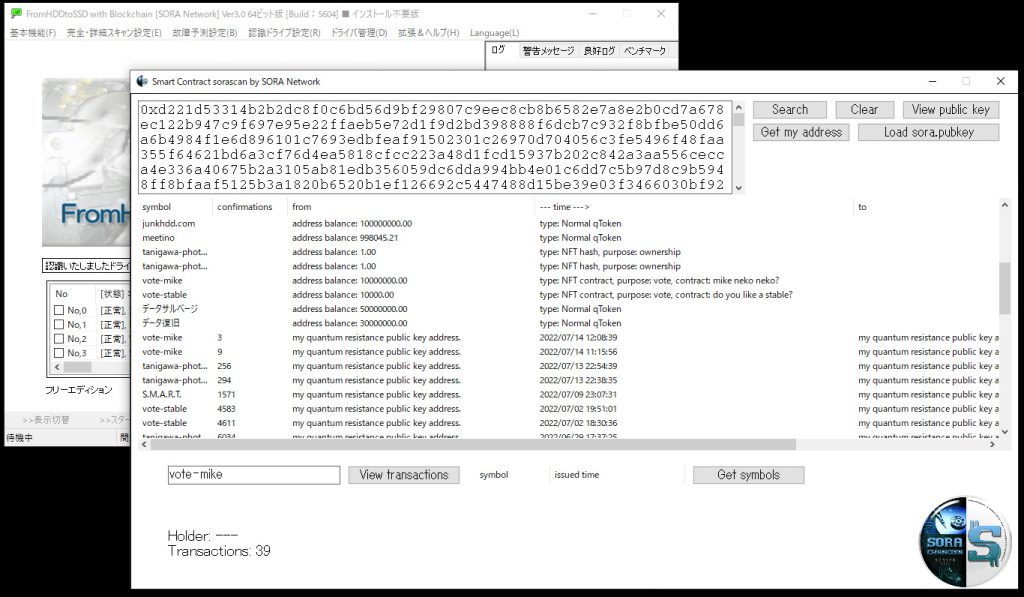
Tasks such as defragmentation or system repair are automatically triggered under specific conditions, with all actions recorded as transactions for reproducibility and transparency.
9. Other Use Cases
- Art certification via NFT linkage
- Sensor data timestamping
- Steganography using the 2048-bit signature field
Roadmap
Current Phase (Already Completed)
- Deployment and operation of quantum-resistant L1
- Construction of independently executable L2 environment
- Live testing of AI × Blockchain functionalities (automated recovery, diagnostics logging, etc.)
Ongoing Key Scalability Monitoring
- Injecting 512–2048-bit keys into L2 and periodically measuring performance impact
- Selecting the most suitable key structures in response to quantum and AI advancements
External Blockchain Integration (2025–2026)
- Exporting successful key schemes from L2 to other L1/L2 platforms
- Exploring interoperability with Ethereum-compatible environments and plugin deployment
AI Diagnostic Function Expansion
- Enhancing AI engines and integrating blockchain audit logging
- Improving simulation accuracy for SSD/HDD and strengthening predictive modeling
Monetization Model Expansion
- Rolling out B2B diagnostic services using staking and mining-based revenue structures
- Developing dashboards to visualize blockchain write-logs and usage analytics
Community and Investor Engagement Phase
- Welcoming experimental proposals from investors and technical participants
- Considering optional DAO governance for L2-specific modules if needed
Conclusion
SORA L2 is not intended for immediate practical deployment. At this stage, it is a testing ground—a platform to explore creative, unconventional ideas. Quantum resistance, signature field applications, and data embedding techniques are all being examined as foundational components of a future decentralized society.
The SORA project will continue to evolve, balancing practical preparation with an experimental spirit.